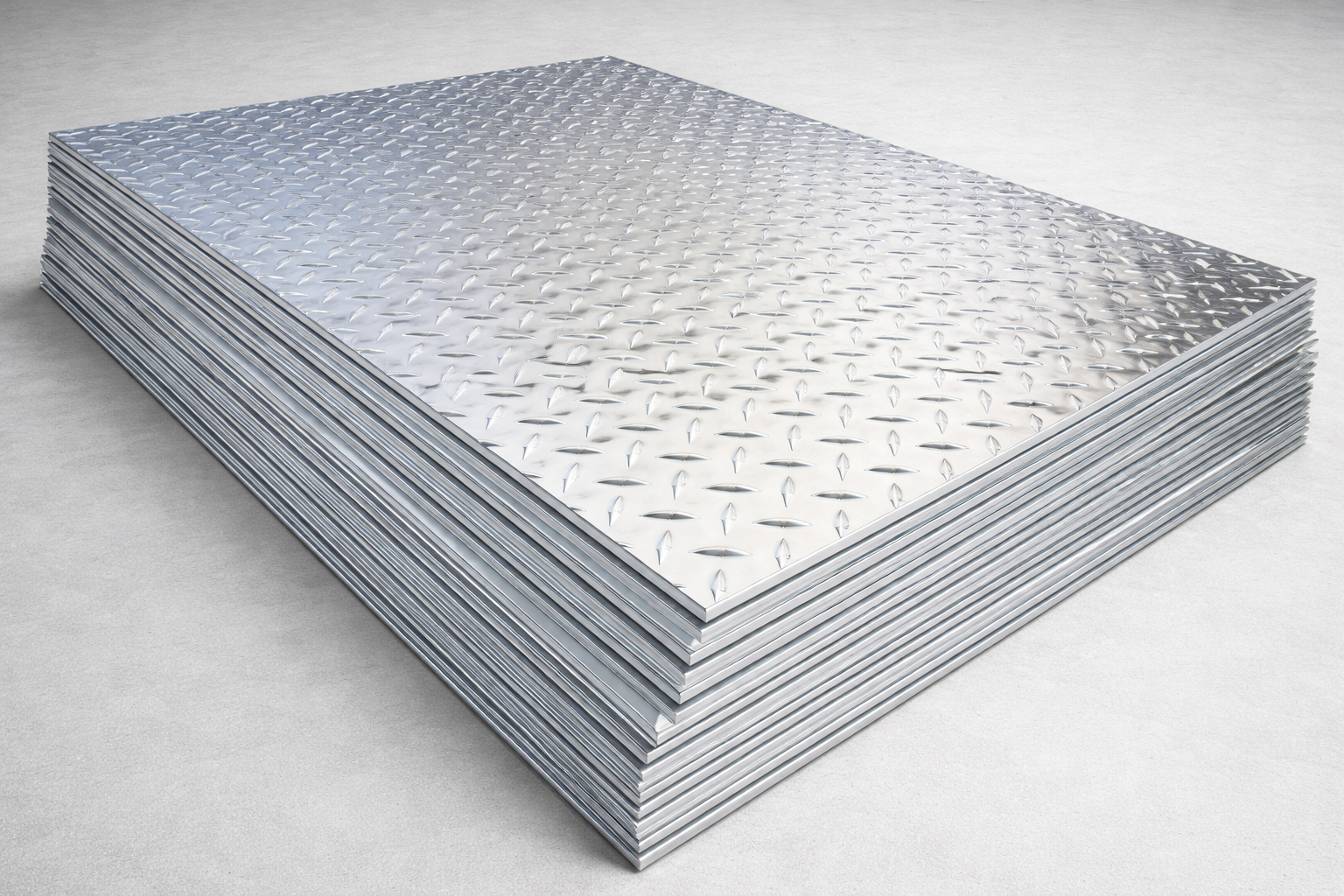
Renaissance Fittings & Piping is a supplier and stockist of Aluminium Chequered Plates in India, supporting industrial fabrication, infrastructure and engineering requirements across multiple regions. Aluminium chequered plates are commonly used where a durable metal surface with improved traction is required.
These plates are manufactured with raised surface patterns created during rolling, forming a textured structure that improves grip. Because of this pattern, aluminium chequered plates are often used for walkways, equipment platforms, stair treads, vehicle flooring and industrial access areas.
In addition to traction benefits, aluminium chequered plates provide the advantages typically associated with aluminium alloys, including corrosion resistance, structural strength relative to weight, and compatibility with common fabrication processes.
Understanding Aluminium Chequered Plates and Their Functional Role
What Are Aluminium Chequered Plates?
Aluminium chequered plates are aluminium sheets or plates manufactured with raised geometric patterns on one side of the material surface. These patterns are created during the rolling process using patterned rollers.
The purpose of the raised pattern is primarily functional. It improves surface grip and reduces the likelihood of slipping, particularly in areas exposed to foot traffic, moisture or industrial operations.
Because aluminium is relatively lightweight compared to many structural metals while still offering reliable mechanical properties, chequered plates are frequently used in industrial flooring systems, vehicle platforms and structural access areas.
Surface Pattern Types in Aluminium Chequered Plates
Manufacturers produce aluminium chequered plates with several different pattern configurations. These patterns vary depending on rolling equipment design and product specification.
Common pattern styles include:
- Diamond pattern plates
- Five-bar pattern plates
- Checker pattern plates
The choice of pattern generally depends on traction requirements, design preferences and application environment.
Why Aluminium Is Used for Chequered Plates
Aluminium alloys are commonly used for chequered plates because of their combination of mechanical strength, corrosion resistance and manageable weight.
Aluminium naturally forms a thin oxide layer on its surface when exposed to air. This oxide layer provides protection against many forms of atmospheric corrosion, which contributes to the material’s durability in outdoor and industrial environments.
Another advantage is the strength-to-weight ratio of aluminium alloys. This allows structures such as access platforms or vehicle flooring systems to maintain durability without adding excessive structural weight.
Aluminium also supports common fabrication processes including cutting, drilling, forming and welding, allowing chequered plates to be adapted to different installation requirements.
Aluminium Chequered Plate Grades Available
Aluminium chequered plates are produced using several aluminium alloys depending on the required strength level, corrosion resistance and fabrication requirements. Grades referenced for aluminium chequered plates may include:
Grade
| Grade | Description |
|---|---|
| 5082 Aluminium Chequered Plates | Known for corrosion resistance and structural performance |
| 5083 Aluminium Chequered Plates | Often selected for demanding marine and moisture-exposed environments |
| 6082 Aluminium Chequered Plates | Higher strength alloy commonly used for engineering components |
| 6083 Aluminium Chequered Plates | Used in fabrication and structural applications |
Grade Specific Pages
Detailed information about each alloy grade can be explored through the following pages:
- 5082 Aluminium Chequered Plates Supplier
- 5083 Aluminium Chequered Plates Supplier
- 6082 Aluminium Chequered Plates Supplier
- 6083 Aluminium Chequered Plates Supplier
These pages provide deeper technical insight into the characteristics of each alloy.
Mechanical and Performance Characteristics of Aluminium Chequered Plates
Tensile Strength, Yield Strength and Structural Stability
Mechanical properties vary depending on alloy composition and material condition. The following table provides general reference ranges associated with these aluminium alloys.
| Alloy Grade | Typical Tensile Strength (MPa) | Typical Yield Strength (MPa) | Elongation (%) |
|---|---|---|---|
| 5082 | 270 – 330 | 125 – 200 | 10 – 16 |
| 5083 | 275 – 350 | 125 – 215 | 10 – 15 |
| 6082 | 260 – 340 | 240 – 280 | 8 – 12 |
| 6083 | 230 – 300 | 200 – 260 | 8 – 12 |
Corrosion Resistance in Industrial Environments
Many aluminium alloys are recognized for their resistance to atmospheric corrosion and moisture exposure. This property allows aluminium chequered plates to perform reliably in outdoor installations and industrial environments where humidity or occasional water exposure occurs.
Material suitability should always be evaluated based on the specific operating environment and maintenance expectations.
Fabrication Properties – Weldability and Machinability
Aluminium chequered plates are widely used in fabrication because they can generally be processed using standard metalworking techniques.
Typical fabrication processes include:
- Cutting
- Drilling
- Machining
- Forming
- Welding
Fabrication procedures should follow appropriate engineering practices depending on the alloy and plate thickness.
Size Range, Dimensions and Surface Finish Options
Standard Plate Dimensions
Aluminium chequered plates are manufactured in a variety of sheet sizes depending on rolling mill capability and market requirements.
Typical dimensions include different combinations of plate width, length and thickness, allowing the material to be used for both small fabrication components and large flooring panels. Exact dimensions and thickness availability should be confirmed during enquiry.
Pattern Height and Surface Texture
The raised pattern on chequered plates is formed during rolling and creates a textured surface designed to increase traction. Pattern height and spacing depend on the roller design used during production.
This textured surface improves grip for foot traffic and equipment movement in industrial installations.
Surface Finish Options
Aluminium chequered plates are commonly supplied in mill finish condition. Additional surface treatments may be discussed depending on the application or fabrication requirements.
Request a Quote for Aluminium Chequered Plates
For project requirements or fabrication needs, please provide:
- Required alloy grade
- Plate thickness
- Plate dimensions
- Quantity
- Delivery location
Frequently Asked Questions (FAQ)
What are aluminium chequered plates used for?
They are commonly used in industrial flooring, stair treads, walkways, equipment platforms and vehicle flooring.
Why do aluminium chequered plates have raised patterns?
Raised patterns improve traction and help reduce slipping risks.
Are aluminium chequered plates suitable for outdoor environments?
Many aluminium alloys offer resistance to atmospheric corrosion.
Can aluminium chequered plates be fabricated?
Yes, they can generally be cut, drilled and formed using appropriate fabrication methods.
How can I confirm available sizes?
Size and thickness availability can be confirmed during quotation enquiries.