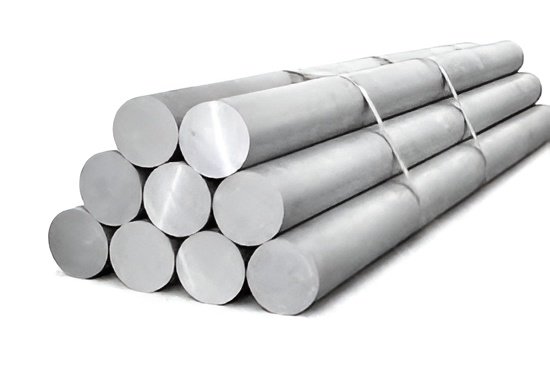
Renaissance Fittings & Piping is a supplier and stockist of Aluminium Round Bars in India, supporting engineering, fabrication and manufacturing industries that require cylindrical aluminium bars for machining and structural components.
Aluminium round bars are solid cylindrical metal bars produced through rolling or extrusion processes. These bars are commonly used in industrial manufacturing where components require machining, turning, drilling or fabrication.
Because aluminium alloys offer a combination of light weight, corrosion resistance and good machinability, aluminium round bars are widely used across engineering industries, mechanical manufacturing and fabrication workshops.
Common industrial applications include:
- Precision machined components
- Shafts and structural supports
- Industrial fasteners and fittings
- Automotive and mechanical parts
These characteristics make aluminium round bars suitable for both fabrication and precision engineering applications.
Understanding Aluminium Round Bars and Their Functional Role
What Are Aluminium Round Bars?
Aluminium round bars are solid cylindrical metal bars manufactured from aluminium alloys. They are typically produced using extrusion or rolling processes and are supplied in straight bar form for industrial machining and fabrication.
These bars are frequently used as base material for manufacturing components that require dimensional accuracy and mechanical reliability.
Manufacturing Process of Aluminium Round Bars
Aluminium round bars are produced using industrial metal forming processes.
Common manufacturing methods include:
- Extrusion processes where aluminium billets are forced through circular dies
- Rolling operations used to form cylindrical bar profiles
- Precision cutting and finishing for dimensional accuracy
The production process influences mechanical properties, dimensional tolerance and surface finish.
Why Aluminium Alloys Are Used for Round Bars
Aluminium alloys are widely used for round bars because they offer a balance of mechanical performance and fabrication flexibility.
Key advantages include:
- Lightweight material compared to many structural metals
- Resistance to atmospheric corrosion
- Good machinability for precision engineering components
- Compatibility with welding and fabrication processes
These properties make aluminium round bars suitable for industrial machining, structural components and equipment manufacturing.
Aluminium Round Bar Grades Available
Different aluminium alloys are used to manufacture aluminium round bars depending on the required mechanical strength, corrosion resistance and fabrication properties.
Grades referenced for aluminium round bars may include:
| Aluminium Grade | Description |
|---|---|
| 5082 Aluminium Round Bars | Known for corrosion resistance and structural durability |
| 5083 Aluminium Round Bars | Often used where enhanced corrosion resistance is required |
| 6082 Aluminium Round Bars | Higher strength alloy commonly used in engineering components |
| 6083 Aluminium Round Bars | Used in fabrication and structural manufacturing |
Additional aluminium grades may also be available depending on project specifications.
Grade Specific Pages
Detailed information about each alloy grade can be explored through the following pages:
- 5082 Aluminium Round Bars Supplier
- 5083 Aluminium Round Bars Supplier
- 6082 Aluminium Round Bars Supplier
- 6083 Aluminium Round Bars Supplier
These pages provide deeper technical information about the characteristics and applications of each aluminium alloy.
Mechanical and Performance Characteristics of Aluminium Round Bars
Tensile Strength, Yield Strength and Structural Stability
Mechanical properties of aluminium round bars depend on alloy composition and material condition. The following table provides general reference ranges associated with these aluminium alloys.
| Alloy Grade | Typical Tensile Strength (MPa) | Typical Yield Strength (MPa) | Elongation (%) |
|---|---|---|---|
| 5082 | 270 – 330 | 125 – 200 | 10 – 16 |
| 5083 | 275 – 350 | 125 – 215 | 10 – 15 |
| 6082 | 260 – 340 | 240 – 280 | 8 – 12 |
| 6083 | 230 - 300 | 240 – 280 | 8 – 12 |
Actual mechanical properties may vary depending on material temper and manufacturing conditions.
Corrosion Resistance in Industrial Environments
Many aluminium alloys demonstrate resistance to atmospheric corrosion, which contributes to their durability in outdoor and industrial environments. However, material selection should consider:
- Environmental exposure
- Contact with chemicals or moisture
- Surface treatments or protective coatings
Machinability and Fabrication Characteristics
Aluminium round bars are widely used in engineering industries because they support multiple machining and fabrication processes. Common machining and fabrication operations include:
- Turning and CNC machining
- Drilling and threading
- Milling operations
- Welding and structural fabrication
These properties make aluminium round bars a common choice for precision components and structural parts.
Size Range, Dimensions and Surface Finish Options
Standard Diameter Range
Aluminium round bars are available in a wide range of diameters depending on extrusion capability and market requirements. Diameter options may vary based on:
- Production equipment capability
- Alloy grade
- Customer specifications
Exact diameter availability is typically confirmed during the enquiry stage.
Length Options
Aluminium round bars are generally supplied in standard industrial bar lengths, although cut lengths may be provided depending on project requirements.
Surface Finish
Round bars are commonly supplied in mill finish condition, which is the natural finish after extrusion or rolling. Additional surface processing may be available depending on application requirements.
Industrial Applications of Aluminium Round Bars in India
Engineering and Machining Industries
Aluminium round bars are frequently used as base material for manufacturing precision machined components used in industrial equipment.
Automotive and Mechanical Components
Because aluminium offers a good strength-to-weight ratio, round bars are commonly used for:
- Automotive components
- Mechanical shafts
- Equipment fittings
Fabrication and Structural Applications
Fabrication workshops use aluminium round bars for structural assemblies, brackets and custom engineering components.
Pan India Supply Network and Bulk Distribution Coverage
Renaissance Fittings & Piping supports the supply of aluminium round bars to engineering and fabrication industries across multiple regions of India.
Delivery timelines may vary depending on:
- Inventory availability
- Order quantity
- Delivery destination
Major Industrial Cities We Supply
| Cities We Serve | |||
|---|---|---|---|
| Mumbai | Pune | Nashik | Nagpur |
| Ahmedabad | Vadodara | Surat | Rajkot |
| Delhi | Noida | Gurugram | Faridabad |
| Jaipur | Indore | Bhopal | Chandigarh |
| Ludhiana | Chennai | Coimbatore | Bengaluru |
| Hyderabad | Kolkata | Patna | Ranchi |
Technical Specification Overview
Manufacturing and Quality Considerations
Aluminium round bars are produced through extrusion or rolling processes using aluminium billets.
Material performance and dimensional consistency depend on:
- Alloy composition
- Manufacturing process
- Quality control procedures during production
Material documentation and certification may be required depending on project or engineering specifications.
Engineering and Machining Industries
Aluminium round bars are frequently used as base material for manufacturing precision machined components used in industrial equipment.
Automotive and Mechanical Components
Because aluminium offers a good strength-to-weight ratio, round bars are commonly used for:
- Automotive components
- Mechanical shafts
- Equipment fittings
Fabrication and Structural Applications
Fabrication workshops use aluminium round bars for structural assemblies, brackets and custom engineering components.
Pan India Supply Network and Bulk Distribution Coverage
Renaissance Fittings & Piping supports the supply of aluminium round bars to engineering and fabrication industries across multiple regions of India.
Delivery timelines may vary depending on:
- Inventory availability
- Order quantity
- Delivery destination
Grade Comparison Summary
| Property Focus | 5082 | 5083 | 6082 | 6083 |
|---|---|---|---|---|
| Corrosion Resistance | High | Very High | Moderate to High | Moderate |
| Weldability | Good | Very Good | Good | Good |
| Relative Strength | Moderate | Moderate | Higher | Moderate to Higher |
| Heat Treatment Capability | No | No | Yes | Yes |
Why Choose a Reliable Aluminium Round Bars Stockist in India
Importance of Multi-Grade Availability
Industrial manufacturing often requires different aluminium alloys depending on strength requirements, corrosion resistance and fabrication processes. Access to multiple grades helps procurement teams select the appropriate material for specific engineering needs.
Material Traceability and Documentation
Traceability and documentation help verify:
- Alloy grade
- Manufacturing source
- Material compliance with engineering specifications
These documents may be required for regulated or infrastructure projects.
Bulk Supply Capability Across India
Large engineering and fabrication projects often require consistent material availability across different locations. Reliable stock availability and coordinated logistics support industrial procurement across India.
Related Aluminium Products
Renaissance Fittings & Piping also supplies:
Request a Quote for Aluminium Round Bars
For procurement enquiries please provide:
- Aluminium alloy grade
- Bar diameter
- Required length
- Quantity
- Delivery location
Frequently Asked Questions (FAQ)
What are aluminium round bars used for?
They are commonly used for machining industrial components, mechanical shafts, fittings and structural engineering parts.
How are aluminium round bars manufactured?
They are typically produced using extrusion or rolling processes where aluminium billets are formed into cylindrical bar profiles.
Are aluminium round bars suitable for machining?
Yes, many aluminium alloys offer good machinability, which makes them suitable for CNC machining and precision component manufacturing.
Are multiple aluminium grades available for round bars?
Yes, aluminium round bars can be produced in several alloy grades depending on mechanical strength and corrosion resistance requirements.
How can I confirm diameter and length availability?
Exact diameter ranges and bar lengths are typically confirmed during quotation or procurement enquiries.