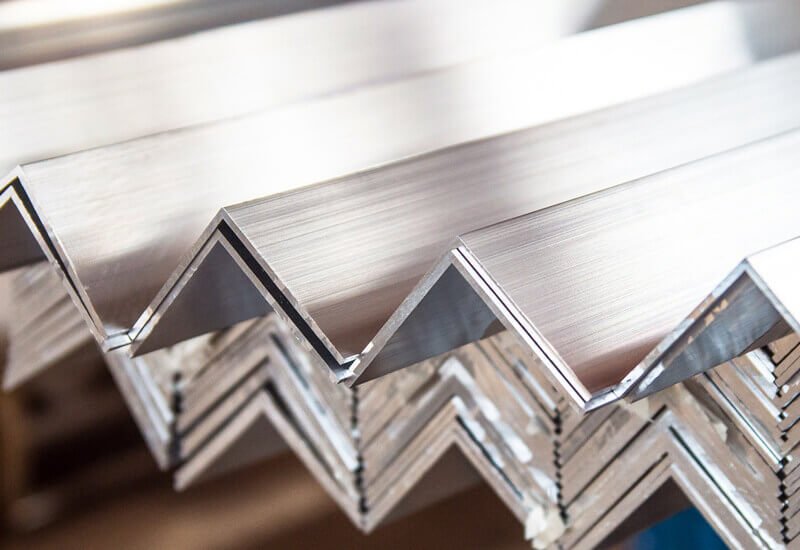
Renaissance Fittings & Piping is a supplier and stockist of Aluminium Alloy Angles in India, supporting structural and fabrication requirements across various industrial sectors. Aluminium angle sections are widely used in reinforcement assemblies, equipment supports, structural frameworks and architectural applications due to their combination of mechanical performance and corrosion resistance.
Aluminium alloy angles are commonly selected in projects where reduced structural weight, durability and fabrication flexibility are required. These profiles are used in infrastructure development, engineering assemblies and general industrial fabrication across India.
Understanding Aluminium Alloy Angles and Their Structural Role
What Are Aluminium Alloy Angles?
Aluminium alloy angles are L-shaped extruded sections formed by two legs positioned at a right angle. These profiles are used to provide reinforcement at corners, joints and load-bearing points within structural assemblies. Their shape enables efficient stress distribution while maintaining manageable material weight.
Aluminium angle sections are produced in different grades and dimensions depending on intended structural and environmental performance requirements.
Equal and Unequal Aluminium Angle Sections
Equal angle sections have identical leg dimensions and are typically used in symmetrical reinforcement designs. Unequal angle sections feature different leg lengths and are selected where structural layout or load direction requires variation in profile geometry.
The selection between equal and unequal angles depends on structural calculations and fabrication requirements.
Why Aluminium Alloys Are Preferred in Structural Applications
Aluminium alloys are frequently chosen for structural profiles because they provide a favorable strength-to-weight ratio and resistance to atmospheric exposure. In many environments, aluminium offers durability with relatively low maintenance.
These angle sections can also be processed using common fabrication techniques such as cutting, drilling and welding, making them suitable for modular and engineered assemblies.
Aluminium Alloy Grades Available in Stock
Renaissance Fittings & Piping supplies aluminium alloy angles in multiple grades suitable for structural and engineering applications.
Currently listed grades include:
Additional grades may be considered based on project requirements and material availability at the time of enquiry. Grade suitability depends on mechanical expectations, fabrication methods and environmental conditions.
Mechanical and Performance Characteristics of Aluminium Alloy Angles
Tensile Strength, Yield Strength and Structural Stability
Mechanical performance varies depending on alloy composition and processing condition. The following table provides general reference ranges associated with commonly used aluminium structural alloys.
| Alloy Grade | Typical Tensile Strength (MPa) | Typical Yield Strength (MPa) | Elongation (%) |
|---|---|---|---|
| 5082 | 270 – 330 | 125 – 200 | 10 – 16 |
| 5083 | 275 – 350 | 125 – 215 | 10 – 15 |
| 6082 | 260 – 340 | 240 – 280 | 8 – 12 |
| 6083 | 230 – 300 | 200 – 260 | 8 – 12 |
Values shown are indicative ranges and may vary depending on manufacturing condition.
Corrosion Resistance in Industrial and Marine Environments
Certain aluminium alloys are recognized for their resistance to atmospheric corrosion and moisture exposure. Material selection should consider environmental severity and intended service conditions.
Suitability for specific applications should be evaluated during project planning.
Fabrication Properties – Weldability and Machinability
Aluminium alloy angles can be processed using standard industrial fabrication methods. Weldability and machinability may vary by grade and condition. Proper fabrication procedures should be followed to maintain structural integrity.
Size Range, Dimensions and Surface Finish Options
Standard Equal Angle Dimensions
Aluminium alloy equal angles are available in structural sizes commonly used in fabrication and engineering applications. Leg dimensions and thickness combinations vary depending on production capability and project requirements.
Specific size availability should be confirmed during enquiry.
Unequal Angle Configurations
Unequal angle sections are produced in various leg combinations suitable for structural assemblies where asymmetrical support is required. Dimensional suitability should be evaluated based on design needs.
Available Lengths and Finishing Options
Aluminium alloy angles are commonly supplied in standard mill lengths. Surface condition is typically mill finish unless additional processing is specified at the time of order placement.
Industrial Applications of Aluminium Alloy Angles in India
Construction and Infrastructure Projects
Aluminium angles are incorporated into structural frames, brackets, façade supports and reinforcement components within construction and infrastructure development.
Marine and Moisture-Exposed Installations
Where environmental exposure is a concern, aluminium angles may be used in support structures and frameworks requiring corrosion resistance.
Engineering and Fabrication Sectors
Fabrication workshops and engineering facilities use aluminium alloy angles in equipment frames, mounting assemblies and structural components due to their fabrication adaptability.
Why Choose a Reliable Aluminium Alloy Angles Stockist in India
Importance of Multi-Grade Availability
Access to multiple grades allows alignment with varied structural and engineering requirements.
Material Traceability
Material documentation and traceability can be discussed during order placement depending on project requirements.
Supply Across India
Supply coordination supports delivery to fabrication units and project sites across different regions of India, subject to order confirmation and logistics planning.
Pan India Supply Network and Bulk Distribution Coverage
Renaissance Fittings & Piping supports supply of aluminium alloy angles across major industrial regions of India. Delivery planning is coordinated based on order specifications and destination.
Major Industrial Cities We Supply
| Cities We Serve | |||
|---|---|---|---|
| Mumbai | Pune | Nashik | Nagpur |
| Aurangabad | Kolhapur | Ahmedabad | Vadodara |
| Surat | Rajkot | Jamnagar | Bhavnagar |
| Indore | Bhopal | Raipur | Bilaspur |
| Delhi | Noida | Greater Noida | Ghaziabad |
| Gurugram | Faridabad | Sonipat | Panipat |
| Jaipur | Udaipur | Jodhpur | Kota |
| Chandigarh | Ludhiana | Amritsar | Dehradun |
| Lucknow | Kanpur | Varanasi | Prayagraj |
| Chennai | Coimbatore | Hosur | Bengaluru |
| Mysuru | Hyderabad | Vijayawada | Visakhapatnam |
| Kochi | Thiruvananthapuram | Madurai | Tiruchirappalli |
| Kolkata | Howrah | Durgapur | Asansol |
| Bhubaneswar | Cuttack | Ranchi | Jamshedpur |
| Patna | Guwahati | Silvassa | Vapi |
| Haridwar | Rudrapur | Gwalior | Jabalpur |
Technical Specification Overview
General Manufacturing and Quality Considerations
Aluminium alloy angle sections are typically produced through extrusion processes using controlled manufacturing parameters. Mechanical properties and dimensional accuracy depend on alloy selection and processing condition.
Specific technical requirements, documentation needs and dimensional tolerances should be discussed during enquiry to ensure alignment with project specifications.
Grade Comparison Summary
| Property Focus | 5082 | 5083 | 6082 | 6083 |
|---|---|---|---|---|
| Corrosion Resistance | High | Very High | Moderate to High | Moderate |
| Weldability | Good | Very Good | Good | Good |
| Relative Strength | Moderate | Moderate | Higher | Moderate to Higher |
| Heat Treatment Capability | No | No | Yes | Yes |
Request a Quote for Aluminium Alloy Angles in India
If you are sourcing Aluminium Alloy Angles for structural, fabrication or project requirements, Renaisancep Pipe and Fitting can assist with grade availability, dimensional confirmation and bulk supply coordination across India.
Whether your requirement involves standard equal angles, unequal sections or specific mechanical performance criteria, our team can review your enquiry and provide commercial details accordingly.
To receive a quotation, please share:
- Required grade
- Size or section dimensions
- Quantity
- Delivery location
Our team will review your requirement and respond with availability and pricing information.
Frequently Asked Questions (FAQ)
What are aluminium alloy angles commonly used for?
They are used for structural reinforcement, support frames, brackets and fabrication assemblies in construction and engineering applications.
How do I choose the correct aluminium alloy grade?
Grade selection depends on required strength, environmental exposure and fabrication method. These factors should be considered during project planning.
What is the difference between equal and unequal aluminium angles?
Equal angles have identical leg dimensions, while unequal angles have different leg lengths to accommodate varied structural requirements.
Can aluminium alloy angles be used outdoors?
Many aluminium alloys are suitable for outdoor use due to their resistance to atmospheric corrosion, but suitability depends on exposure conditions.
How can I confirm size and grade availability?
Size, grade and quantity requirements can be discussed during the enquiry stage to determine availability at the time of order.